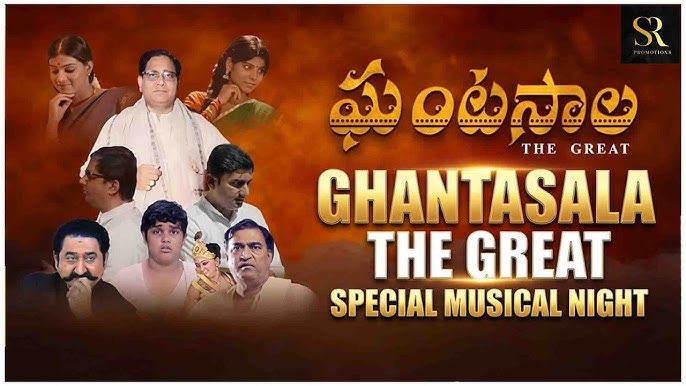
Resurrecting the Voice of a Century: A Deep Dive into “Ghantasala: The Great”
The legacy of a legendary artist is often measured by the timelessness of their work, but rarely do we get to witness the grueling journey that forged such genius. “Ghantasala: The Great” (2026) is a monumental biographical drama that seeks to do just that. Directed by CH Rama Rao, this film is more than a biopic; it is a cinematic pilgrimage into the life of Ghantasala Venkateswara Rao, the man whose voice became the heartbeat of South Indian cinema for decades.1
As an ambitious long-form feature, the film navigates the complexities of a man who was a freedom fighter, a classically trained prodigy, and the ultimate playback singer.2 It arrives at a time when the Indian film industry is increasingly looking toward its roots to tell stories of substance and cultural significance.
Film Overview: At a Glance
| Feature | Details |
| Title | Ghantasala: The Great |
| Release Date | January 2, 2026 |
| Genre | Biographical Drama / Musical |
| Director | CH Rama Rao |
| Lead Cast | Krishna Chaitanya, Mrudula Iyengar, Suman, Sai Kiran |
| Runtime | 162 Minutes (2h 42m) |
| Music Director | Saluri Vasu Rao |
| Language | Telugu |
Full Plot Synopsis: From Struggle to Stardom
The narrative of Ghantasala: The Great follows a strictly chronological path, providing an intimate look at the various “avatars” of the maestro. The story begins in the 1930s, showing a young Venkateswara Rao (played with innocence by Master Atulith) who is deeply influenced by his father’s musical aspirations.3 Following his father’s untimely demise, the boy sets out on an arduous journey to Vizianagaram to master the art of Carnatic music.4
The film does not shy away from the darker periods of his life. It vividly portrays his years of “Madhukaram” (seeking alms for food) while training under the legendary Patrayani Sitarama Sastry.5 This section of the film serves as a testament to his sheer resilience against hunger and social rejection.6
A significant portion of the screenplay is dedicated to his role in the Indian Independence movement. The film highlights his arrest during the Quit India Movement, where he spent 18 months in the Alipore jail.7 This experience is depicted as a turning point that added a layer of profound gravity to his later musical expressions.
The second half shifts to the bustling studios of Madras (now Chennai). Under the guidance of mentors like Samudrala Raghavacharya, Ghantasala transitions from a struggling chorus singer to a premier playback artist and music director.8 The film concludes with his legendary recording of the Bhagavad Gita, showing a physically frail but spiritually invincible artist fulfilling his final creative wish before his passing in 1974.
Detailed Critique: An Artistic Evaluation
Direction and Narrative Flow
CH Rama Rao approaches the subject with a sense of reverence that is palpable in every frame.9 Rather than opting for a fast-paced commercial narrative, Rao chooses a deliberate, almost meditative pace.10 While this choice helps in building emotional depth, it occasionally results in a “documentary-style” feel that might test the patience of mainstream audiences used to high-octane drama. However, for those seeking an authentic historical record, the direction is remarkably sincere.
Performances
The weight of the film rests on the shoulders of Krishna Chaitanya. Being a professional singer himself, Chaitanya brings a unique “musical physicality” to the role.11 He perfectly mimics Ghantasala’s iconic head tilts and his humble, slightly stooped posture. His performance is particularly effective in the recording room scenes, where he captures the sheer ecstasy of a singer lost in his craft.
Mrudula Iyengar, as Savitri (Ghantasala’s wife), delivers a nuanced performance.12 She portrays the silent strength of a partner who managed the household while her husband became a public icon. Suman’s cameo as the legendary Bade Ghulam Ali Khan is a casting masterstroke, providing a bridge between the worlds of classical and film music.13
Visuals and Production Design
Recreating the 1940s and 50s is no small feat. The production design team deserves credit for the authentic sets of old Madras and the gritty, realistic portrayal of the jail sequences.14 The cinematography by Venu Muralidhar Vadnala uses a warm, nostalgic palette that matures as the story progresses into the technicolor era of the 1960s.15
Sound and Music
In a film about the “Gaana Gandharva,” the music is naturally the protagonist. Saluri Vasu Rao does an excellent job of integrating Ghantasala’s original vocals with a modern background score.16 The use of the maestro’s actual voice for the climax—singing the Bhagavad Gita—is the film’s emotional peak, guaranteed to leave audiences in tears.
Strengths and Weaknesses
Strengths
-
Emotional Authenticity: The film successfully avoids the “superhero” tropes often found in biopics, focusing instead on the human vulnerabilities of the legend.
-
Historical Accuracy: From his jail time to his professional rivalries and friendships, the film feels well-researched.
-
Musical Legacy: The integration of classic melodies provides a nostalgic trip for older viewers and a discovery for the younger generation.
-
Lead Performance: Krishna Chaitanya’s portrayal is a career-best and feels deeply respectful.17
Weaknesses
-
Lengthy Runtime: At 162 minutes, the film feels slightly overstretched, especially in the transition between his youth and professional peak.
-
Technical Polish: Some of the visual effects used for period landscapes and crowd extensions lack the high-end finish of bigger budget productions.
-
Pacing: The linear storytelling becomes predictable in the mid-section of the second half.
Final Verdict
“Ghantasala: The Great” is a soulful, honest, and deeply moving tribute to a man who defined the musical soul of the Telugu people.18 While it may lack the flashy editing of contemporary cinema, it makes up for it with heart and historical integrity. It is an essential watch for any lover of Indian cinema, serving as a reminder that behind every legendary voice is a story of immense sacrifice and unwavering discipline.
Review Schema
| Category | Rating / Status |
| Critical Rating | 3.5 / 5.0 |
| Performance | Excellent (Krishna Chaitanya) |
| Cinematography | Good |
| Music & Sound | Masterful |
| Verdict | A Heartfelt Tribute |