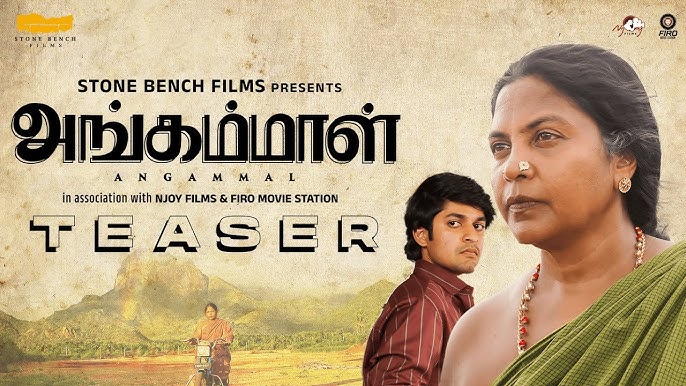
Angammal Movie: A Powerful Tamil Rural Drama About Authority and Social Fear
Introduction
Angammal is a Tamil-language rural drama that delves into the darker realities of power, fear, and social control within a tightly knit village community. Centered on a dominant female figure whose authority surpasses law and morality, the film presents a stark examination of how oppression can thrive when tradition, caste, and silence intersect. Rather than offering conventional heroism, Angammal focuses on the anatomy of power itself—how it is sustained, justified, and eventually questioned.
Movie Overview
| Category | Details |
|---|---|
| Movie Title | Angammal |
| Language | Tamil |
| Genre | Rural Drama / Social Film |
| Setting | South Indian village |
| Core Themes | Power, patriarchy, caste hierarchy, fear |
| Narrative Style | Realistic, character-driven |
| Tone | Gritty, serious, introspective |
Story Synopsis
The film unfolds in a remote village where Angammal is the undisputed authority. Though she holds no official position, her influence governs every aspect of village life. Decisions related to justice, punishment, and social conduct are all dictated by her word. Villagers obey not out of respect, but out of deeply ingrained fear and generational conditioning.
Angammal portrays herself as a guardian of tradition and order, often framing her control as necessary for maintaining peace. However, as the story progresses, the audience witnesses the cost of this control—suppressed voices, enforced silence, and moral compromises that erode the community from within.
The narrative introduces several villagers who begin to sense the injustice embedded in Angammal’s rule. These characters, particularly women and younger residents, quietly struggle between survival and resistance. A pivotal incident shakes the village’s fragile stability, exposing Angammal’s hypocrisy and challenging the legitimacy of her authority.
As tensions rise, long-hidden truths surface, forcing the village to confront the consequences of unquestioned power. The film moves steadily toward a confrontation that is less about revenge and more about moral reckoning.
Themes and Social Commentary
Power Without Accountability
One of the film’s strongest ideas is its depiction of power operating outside formal systems. Angammal’s dominance exists because it has never been challenged. The film shows how fear can become a substitute for law, and how authority thrives when accountability is absent.
Female Authority in a Patriarchal System
While Angammal is a woman, the film avoids portraying her as a symbol of empowerment. Instead, it explores how individuals—regardless of gender—can uphold and perpetuate oppressive systems. This nuanced portrayal prevents the narrative from becoming simplistic or ideological.
Silence as Participation
The villagers’ silence is a recurring motif. Their refusal to speak out is not framed purely as weakness, but as a survival mechanism shaped by years of intimidation. The film suggests that oppression survives not only through violence, but through collective submission.
Performances
The performance of Angammal is central to the film’s impact. The character is portrayed with restraint rather than theatrical aggression, making her presence consistently unsettling. Small gestures, controlled dialogue, and prolonged silences contribute to her intimidating authority.
Supporting characters, though limited in screen time, effectively represent different responses to power—obedience, fear, quiet resistance, and moral conflict. While some roles could have been more deeply explored, they collectively reinforce the film’s social landscape.
Direction and Screenplay
The direction favors realism over dramatization. Scenes unfold patiently, allowing tension to emerge naturally from interactions rather than dramatic twists. The screenplay avoids excessive exposition, trusting visual storytelling and subtext to communicate meaning.
Dialogues are sharp and purposeful, often revealing character dynamics rather than advancing plot alone. The pacing is intentionally slow, mirroring the suffocating environment of a village trapped under authoritarian control.
Visuals and Sound
Visually, the film relies on natural lighting and earthy color palettes to ground the story in realism. Wide shots of the village contrast with claustrophobic interior scenes, symbolizing the illusion of freedom versus lived oppression.
The sound design is minimalistic, using ambient village sounds instead of a dominant background score. This restraint enhances authenticity and keeps the audience immersed in the narrative world.
Strengths and Limitations
Strengths
-
Strong central character and performance
-
Bold exploration of rural power structures
-
Realistic tone and grounded storytelling
-
Socially relevant themes
Limitations
-
Slow pacing may not appeal to all viewers
-
Limited development of secondary characters
-
Lack of conventional dramatic payoff
Conclusion
Angammal is a serious and uncompromising Tamil film that prioritizes social reflection over entertainment. It challenges viewers to question the nature of authority, the cost of silence, and the systems that normalize oppression. While its deliberate pace and heavy themes may limit mainstream appeal, the film succeeds as a thoughtful piece of rural social cinema.
For audiences interested in realistic narratives that confront uncomfortable truths, Angammal offers a compelling and meaningful viewing experience.
SEO Keywords
Angammal movie, Angammal Tamil movie, Angammal film story, Angammal movie synopsis, Angammal rural drama, Angammal social film